AED
1 model from Amoul
An AED (Automated External Defibrillator) is a portable device designed for non-medical personnel to deliver an electric shock during sudden cardiac arrest, restoring normal heart rhythm. According to the American Heart Association (AHA), using an AED within the first few minutes increases survival rates up to 70% — survival decreases approximately 10% for every minute without defibrillation. Thunder Venture Group distributes the Amoul i-Series AED — models i7 (graphic display) and i9 (7" HD color screen) — in both semi-automatic and fully automatic configurations. All models feature biphasic waveform up to 360J, IP65 water and dust protection, Thai voice prompts, and AED network management for remote device monitoring. Ideal for hospitals, public spaces, hotels, offices, malls, airports, factories, and schools. CE and IEC 60601-2-4 certified.
All AEDs
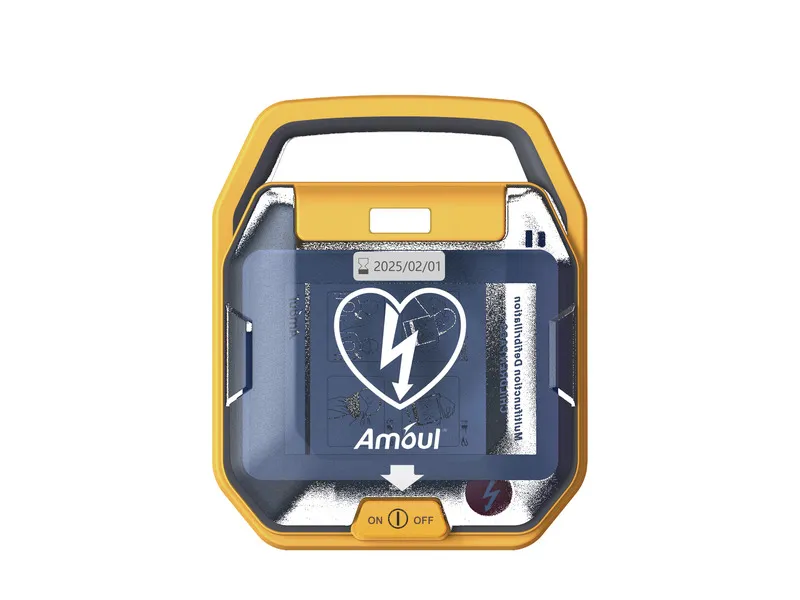
Choosing an Amoul i-Series model
The Amoul i-Series comes in four versions. They share the same biphasic waveform (up to 360J), IP65 protection against dust and water, multi-language voice prompts including Thai, and the AED network management platform. The differences are the screen and who presses the shock button.
- i7: graphic display, semi-automatic. The rescuer presses the shock button when the device advises a shock.
- i7 Plus: graphic display, fully automatic. The device delivers the shock itself after warning everyone to stand clear.
- i9: 7-inch HD colour screen, semi-automatic.
- i9 Plus: 7-inch HD colour screen, fully automatic.
Semi-automatic or fully automatic? Semi-automatic models suit hospitals, clinics and sites with trained first-aid teams. Fully automatic models remove the button press, which suits public places where the rescuer is most likely an untrained bystander.
Graphic or colour screen? The i9's 7-inch colour screen gives larger, clearer on-screen guidance; the i7 keeps a simpler graphic display. See our AED comparison guide for a side-by-side view, or the Amoul AED i-Series product page.
Where to place an AED and how many you need
The goal is simple: a rescuer should be able to bring the AED to the patient within about 3 minutes, because brain damage begins after 3 to 5 minutes without circulation. In practice that means:
- Mount the AED in a visible, signposted spot along main routes, such as lobbies, reception desks, security posts and lift halls.
- In large or multi-storey buildings, plan one AED per zone or floor rather than one for the whole site. Walk the route with a stopwatch.
- Keep the cabinet unlocked, or use an alarmed cabinet, so no one has to hunt for a key.
- Make sure staff on every shift know where it is.
Our guides on AEDs for hotels and AEDs for offices cover placement in those settings, and AED standards and law in Thailand covers the regulatory side.
Keeping an AED ready: pads, batteries and checks
An AED with expired pads or a flat battery will not help anyone. Three things need attention:
- Status indicator. Check it at least once a month. The Amoul AED network management platform reports device status remotely, so a facility manager can see every unit in one place.
- Electrode pads. Pads carry an expiry date and must be replaced after every use.
- Battery. Replace it before the expiry date shown on the unit, or when the device warns of low battery.
Our AED maintenance checklist is a printable form for monthly checks. Thunder Venture Group supplies replacement pads and batteries and inspects devices on site.
Training and support
Anyone can use an AED, because the voice prompts guide every step. A short hands-on session still makes people faster and more confident. We train your staff on site when we install the device, and our step-by-step guide to using an AED and CPR guide make good refreshers.
Delivery and installation cover all 77 provinces, and we typically reply within 24 hours. If you are new to the topic, start with What is an AED? Hospitals building a resuscitation set-up often pair AEDs with automatic CPR devices.
Frequently Asked Questions
What is an AED?
What does AED stand for?
What does an AED do?
How do you use an AED step by step?
What types of AED are there?
Where should AEDs be installed?
Who can use an AED? Is a license required?
How should an AED be maintained?
Related guides
- Medical Equipment Calibration: A Guide for Hospitals and Clinics
- Thai AED Law — Ministerial Regulation No. 69, Installation Standards & Building Requirements
- What is CPR? 7-Step Guide — CPR + AED Complete Guide for Bystanders
- What is a Defibrillator? Types & Complete Guide — AED, ICD, Manual & More
- Cardiac Arrest: How Many Minutes Until Danger — Survival Guide for Sudden Cardiac Arrest
- AED Comparison: Which Brand Is Best — Top 5 Brands in Thailand 2026